)
25 Feb 2026
Year of the Horse Market Flash | Insights into the Residential Carbon Monoxide Alarm Market in the UK and EU Countries
According to the UK Health Security Agency, risks of carbon monoxide (CO) pollution may arise from household appliances that are improperly installed, faulty, or poorly maintained. These appliances include, but are not limited to:
•Gas boilers
•Cookers and stoves using wood, kerosene, natural gas, or propane
•Heating appliances using wood, oil, or natural gas
In addition, using portable generators, barbecues, or camping stoves indoors, in caravans, or tents can lead to the risk of carbon monoxide poisoning. Even outdoor barbecues that are not fully extinguished may cause carbon monoxide to accumulate inside tents. For this reason, the use of carbon monoxide alarms is recommended for camping.
Across the UK and EU, carbon monoxide alarms are generally required to comply with the European standards BS EN 50291-1 and BS EN 50291-2 to ensure product performance, safety and market access.
Each country has established its own installation and mandatory requirements based on its residential building types and fuel usage practices.
United Kingdom (including England, Scotland, Wales and Northern Ireland)
UK regulations require carbon monoxide alarms to be installed in rented residential properties containing fixed combustion appliances (wood-burning, gas, oil-fired, etc.). Since 2022, the relevant requirements have been further clarified: landlords must install alarms complying with UK standards (such as BS EN 50291) in all living spaces with fixed combustion appliances. Non-compliance may result in fines imposed by local authorities.For owner-occupied homes, although not legally mandatory, industry and safety guidance still strongly recommends installation.
Ireland
Ireland’s Building Regulations (Part J) stipulate that a carbon monoxide alarm must be installed when installing or replacing an open-flued or unenclosed combustion appliance (gas, oil, coal or wood-fired). These alarms are required to comply with the EN 50291 series of standards. For rental properties, relevant regulations also mandate the installation of carbon monoxide alarms in rooms where combustion appliances are present.
Poland
Poland is gradually advancing regulations on residential safety alarms, including requirements for the installation of smoke alarms and carbon monoxide alarms. It is expected to gradually cover all types of residential properties in the coming years (with different implementation timetables for specific property types).
France
In France, regulations require the installation of carbon monoxide alarms in rental residential properties, which is usually the responsibility of the landlord to complete before tenants move in. At the same time, all rooms with combustion appliances shall be equipped with compliant alarms.
Germany
German building codes (including current construction regulations) require carbon monoxide alarms to be installed in rental homes, in locations with gas or oil-fired heating systems, or in attached garages, and that they undergo regular testing and maintenance. Other EU countries generally also establish their own national installation guidelines and market access requirements based on the EN 50291 standard.
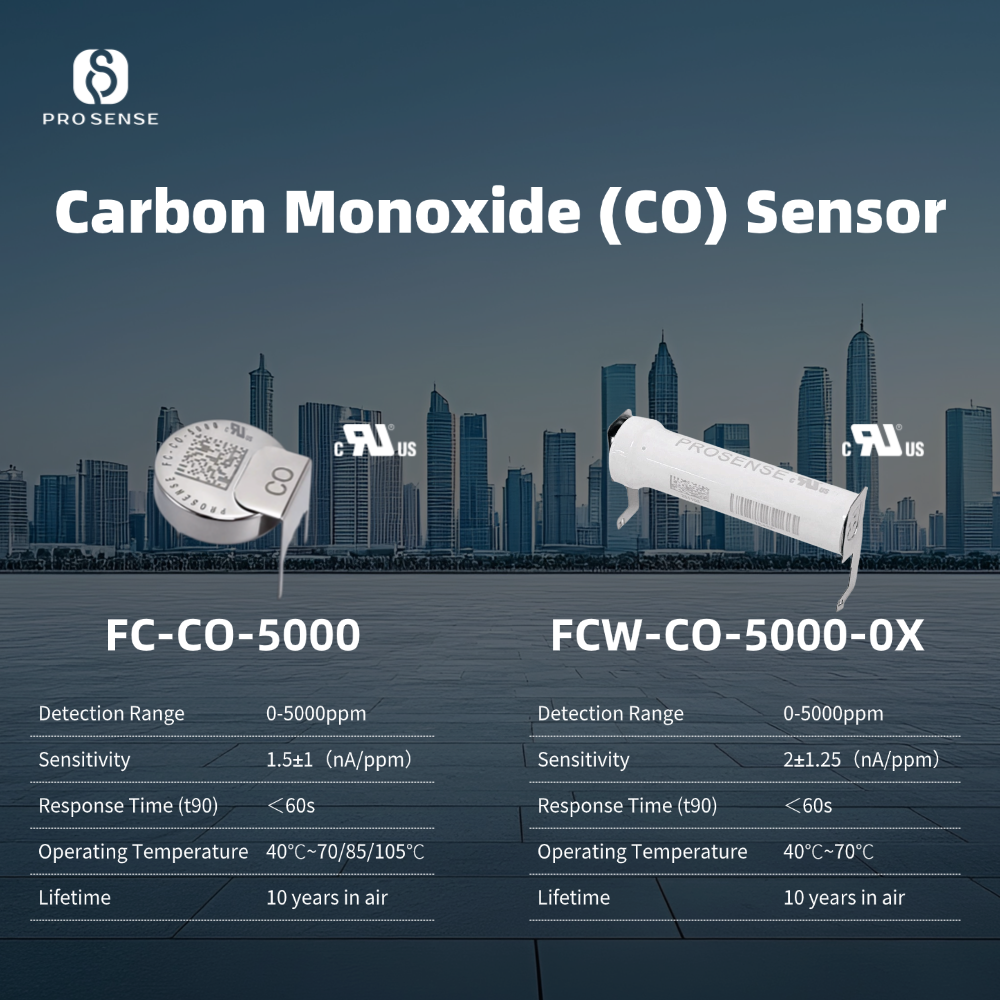
Powered by its independent R&D capabilities, ProSense has launched the FC-CO-5000 and FCW-CO-5000-0X series carbon monoxide sensors.These are currently the only CO sensor solutions in the industry that simultaneously meet the UL certification requirements for residential, recreational vehicle (RV), and marine applications in both the European Union and North America.
About ProSense
ProSense is a high-tech enterprise specializing in the R&D and manufacturing of advanced gas sensors, committed to providing global customers with high-performance and highly reliable sensing solutions. The company continuously invests in core technology research and development, addresses key pain points in the industry, and consistently leads the development trend of gas sensing technology.
With innovative products and superior quality, ProSense is gradually growing into an important promoter and leader in the global gas safety monitoring sector.
ProSense adheres to a full-stack independent R&D strategy. It owns a kilogram-scale gas sensor catalyst development base and an automated production, aging and calibration system with an annual output of tens of millions of gas sensors. Its product portfolio covers the detection of toxic and harmful gases, flammable and explosive gases, and environmental gases.
A number of ProSense’s innovative products have become core sensing components in vertical fields including smart fire protection, industrial detection, and energy storage safety.
)
)

)
)
)