)
Understanding Fire Rated Glass Classifications
Understanding Fire Rated Glass Classifications
Fire rated glass is classified using a rating system that clearly defines its performance capabilities during a fire. In the UK and Europe, these classifications are crucial for meeting building regulations (like Approved Document B) and ensuring the right level of safety.
The classifications are typically represented by the letters E, EW and EI, followed by a number indicating the minutes it remains effective (e.g., 30, 60, 90, or 120).
EI - Integrity and Insulation (High Performance)
The ‘EI’ classification represents the highest performance level.
What it does: It stops the spread of flames and smoke AND creates a barrier against heat transfer.
How it works: We achieve this by placing a clear intumescent interlayer between multiple sheets of glass. When exposed to heat, this layer expands and turns opaque to form a robust, insulating shield.
Best for: Protecting evacuation routes (like corridors and stairwells). It ensures the non-fire side remains cool enough for people to walk past safely and prevents furnishings on the other side from spontaneously igniting.
What is fire rated glass used for?
Fire-rated glass is a key component in building safety strategies. It allows architects to create light, open spaces without ignoring compliance. You will commonly find these systems in commercial office atriums, hospital corridors and school stairwells where maintaining visibility is just as critical as the fire barrier itself.
Fire Doors and Screens
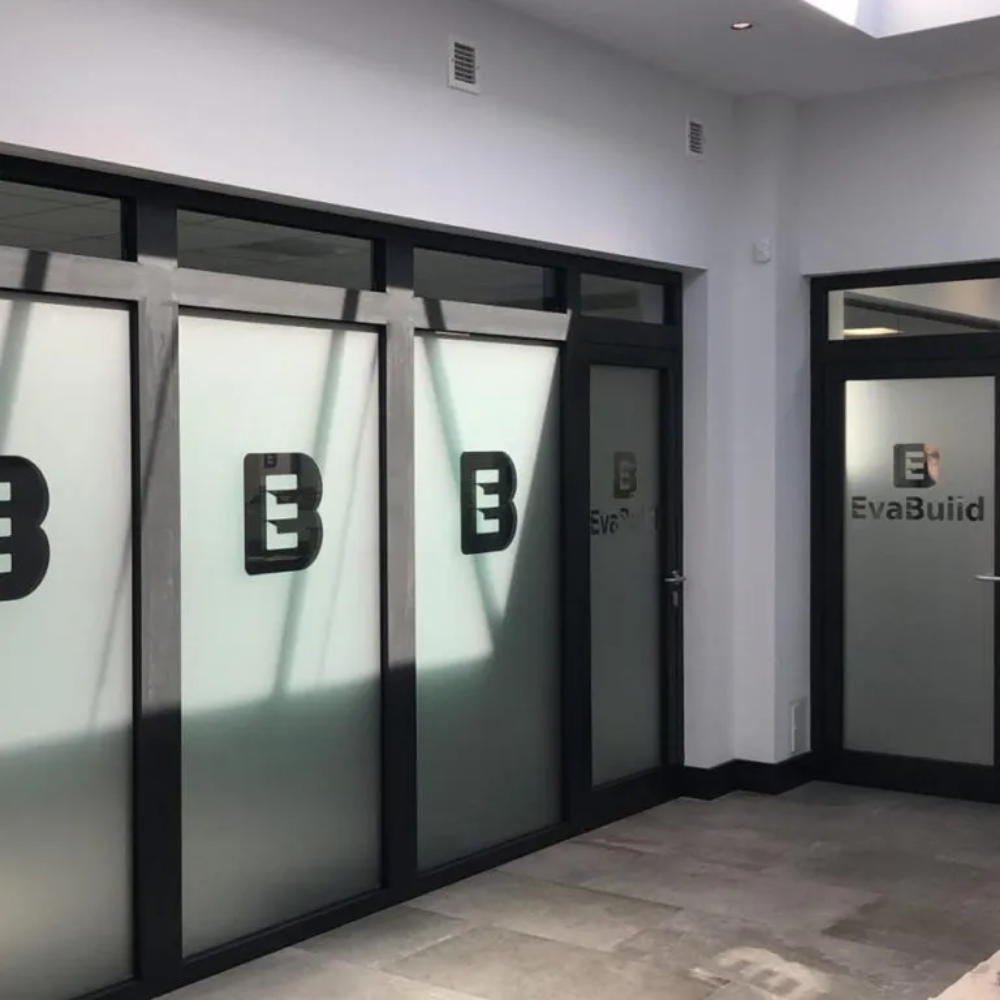
Glass is a standard feature in modern fire doors and surrounding screens. These installations allow occupants to see escape routes clearly during an emergency while holding the fire in a specific compartment. EI rated glass is critical in these scenarios to ensure escape corridors do not become dangerously hot.
Partitions
Fire rated glass partitions divide spaces in open-plan offices, schools and hospitals without blocking natural light. They create specific zones like meeting rooms while ensuring that if a fire starts, it stays contained within the area of origin. This capability extends to the building envelope, allowing large glass facades and curtain walls to meet safety regulations without compromising the architectural design.
At Aluminium Fire Systems, understanding fire glass classifications is fundamental to how we specify and supply our fire rated aluminium systems. We specialise in high-performance EI 30, EI 60, EI 90 and EI 120 solutions, working closely with contractors and specifiers to ensure the correct rating is selected for each project. Our door, screen, partition and glazing systems are tested as complete assemblies and supported by full certification and documentation to streamline building control approval because compliance should be clear, not complicated.
)
)

)
)
)